



































Lesser-Known Temples Near Kumbh Ghats You Should Not Miss
Discover hidden and lesser-known temples near Kumbh ghats in Nashik. Sita Gufa, Kapaleshwar Mahadev, Sundar Narayan, and Godavari Devi Temple secrets revealed.

Temple One: Kapaleshwar Mahadev Temple – The Shiva Shrine Overlooking Ramkund
Let me start with a temple that is visible from Ramkund but somehow invisible to most pilgrims.
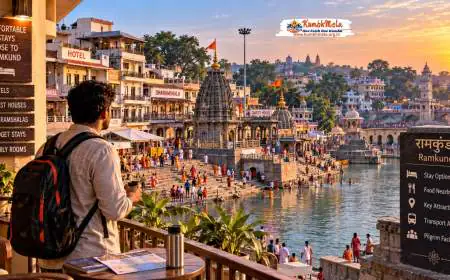
Kapaleshwar Mahadev Temple sits right on the banks of the Godavari, adjacent to Ramkund . You can see it from the ghat steps. But you have to actually walk up to reach it – and most people don't.
What makes it special:
The name Kapaleshwar comes from a powerful legend. Lord Shiva is believed to have carried the kapal (skull) of Brahma after cutting off his fifth head. This temple is associated with that story of penance and redemption. The Shivling here is considered extremely powerful for those seeking relief from ancestral curses or karmic burdens.
Trending Guides Now

Temple Crowd Control During Kumbh
Read Guide →
Darshan Etiquette Every Pilgrim Must Follow at Kumbh
Read Guide →
Trimbakeshwar Temple Importance During Kumbh Mela
Read Guide →
Trimbakeshwar Darshan Rules During Kumbh Mela 2027-28
Read Guide →
Impact of Kumbh on Nashik Real Estate Market
Read Guide →
Nashik Kumbh Mela 2027 Latest Preparations Status - January 2026
Read Guide →
Why Temple Visits Complement Holy Bath Rituals
Read Guide →
Digital Lost and Found Network for Kumbh Visitors
Read Guide →The climb: There are two ways to reach this temple. One involves a bit of a steep climb up the steps. The other is a side access with a gentle slope and very few steps . If you have mobility issues, ask a local for the easier entrance.
What you will feel: The temple is quieter than the chaos of Ramkund below. Standing here, you look down at the thousands of pilgrims bathing, and you feel a strange sense of peace. The energy is distinctly Shaivite – raw, intense, and deeply still.
Darshan Tips:
-
Best time to visit: Early morning, before the Ramkund crowds build up
-
What to offer: Bilva leaves, milk, or simply your folded hands
-
Time needed: 15-20 minutes
-
Entry: Free
Temple Two: Sundar Narayan Temple – A Vishnu Jewel in a Shaiva Land
Nashik is primarily a Shaiva city – Lord Shiva dominates here. But right near Ramkund, tucked into the same complex, is a beautiful Vishnu temple called Sundar Narayan Temple .
What makes it special:
The name Sundar Narayan means "Beautiful Narayan." And the temple lives up to its name. The architecture is distinct from the black stone of Kalaram – here, you see intricate carvings, a different style of shikhara, and an idol of Vishnu that radiates a quiet, peaceful energy very different from the intense Shiva worship all around.
Why pilgrims miss it: It is small. It is not on the main walking path. It gets overshadowed by the massive Kalaram Temple and the dramatic Ramkund ghat. But the devotees who do find it often describe it as their favorite spot in Panchavati.
Darshan Tips:
-
Best time to visit: Late afternoon, when the sun hits the temple carvings
-
Time needed: 10-15 minutes
-
Entry: Free
Temple Three: Naro Shankara Mandir – The Hidden Marathi Heritage Temple
This is a name you will not find on most tourist maps. Naro Shankara Mandir is one of the hidden gems of the Ramkund area .
What makes it special:
This temple is associated with Naro Shankar – a legendary figure in Maratha history known for his devotion and his architectural patronage. The temple reflects a distinct Maratha architectural style that is different from the ancient black stone temples. It is smaller, more intimate, and carries the energy of Maharashtra's cultural renaissance.
Why it is hard to find: It is tucked away in the narrow lanes behind the main ghat. You need to walk away from the river, into the old city fabric, to find it. But that is precisely what makes it special – finding Naro Shankara feels like discovery, not tourism.
Darshan Tips:
-
How to find it: Ask any local priest near Ramkund for "Naro Shankara Mandir" – they will point you to the lane
-
Time needed: 10-15 minutes
-
Entry: Free
Temple Four: Sita Gufa – The Cave Where the Ramayana Changed Course
I am including Sita Gufa in this list because, surprisingly, many pilgrims still miss it. It is only a one-minute walk from Kalaram Temple , but somehow, thousands walk past the entrance every day without going in.
What makes it special:
This is the cave where Mata Sita is believed to have lived during her exile with Lord Ram and Lakshman . The cave is narrow, dark, and intimate. Inside, you will find a Shivling that Sita is believed to have worshipped daily . The five banyan trees outside – the Panchavati that gave this area its name – still stand as silent witnesses.
This is also the place where the abduction happened. According to the Ramayana, Ravan lured Sita outside the cave and carried her away . Standing inside this cramped space, you can almost feel the weight of that moment.
Important practical notes:
-
Access warning: The cave entrance is narrow, and you must climb down a few steps in a seated position . Senior citizens, obese individuals, or those with mobility issues should exercise caution
-
Time needed: 15-20 minutes. The cave is small – you will not spend hours here. But those 15 minutes are profound.
Spiritual Tip: Sit in silence for a few minutes inside the cave. Do not rush. Let the darkness and the history sink in.
Temple Five: Godavari Devi Temple – Opens Once Every Twelve Years
This is the most extraordinary temple on this list – and the most hidden.
The Godavari Devi Temple is located near Ramkund, but here is the catch. It opens only once every twelve years – during the Kumbh Mela . For the rest of the eleven-year cycle, the doors remain shut.
What makes it special:
This temple is dedicated to the Goddess Godavari – the river personified as a deity. During the Kumbh Mela, when the Goddess is believed to be most present in the waters, the temple doors open for darshan. Pilgrims who are fortunate enough to be in Nashik during the Kumbh consider it a once-in-a-lifetime blessing to offer prayers inside this sanctum.
Why you must plan for it: If you are coming for the Nashik Kumbh in 2027, you must actively seek out this temple. It is not on the main tourist route. It does not have massive signboards. Ask the local priests near Ramkund about "Godavari Devi Mandir" during the Kumbh days – they will guide you.
Next opening: Nashik Kumbh Mela 2027 – dates confirmed for August 2, August 31, and September 11-12, 2027 .
Temple Six: Subrahmanya Temple – A South Indian Presence in Panchavati
Walking through the lanes of Panchavati, you might be surprised to find a Lord Subrahmanya temple with an idol that resembles the famous Palani Subrahmanya of Tamil Nadu .
What makes it special:
This temple represents the confluence of North and South Indian traditions at the Kumbh. Pilgrims from the South who come for the Godavari snan often make a beeline for this temple. The idol is distinctive – not the usual six-faced Murugan of the North, but the specific form worshipped in Palani.
How to find it: The temple is within walking distance of the Kalaram Temple and Sita Gufa complex. Like Naro Shankara, it is tucked into the narrow lanes – you need to look for it.
Darshan Tips:
-
Best offering: Coconut, bananas, or jaggery
-
Time needed: 10-15 minutes
-
Entry: Free
Temple Seven: Goraram Temple – The Quiet Sanctuary
The Goraram Temple is another hidden gem in the Panchavati area . Less known than Kalaram, smaller in scale, but deeply cherished by locals.
What makes it special:
Goraram translates to "White Ram" – named either for the color of the idol or for a specific saint associated with the temple. This temple sees fewer tourists and more local devotees. If you want a moment of quiet darshan without the rush and the crowd, this is your spot.
Why pilgrims miss it: Because it is not on the main Kalaram-Sita Gufa-Ramkund axis. You have to wander a bit – and most pilgrims do not wander. But the ones who do are rewarded with peace.
The Complete Walking Map to Hidden Temples
Here is how to access all these temples without getting lost.
Starting Point: Kalaram Temple north entrance
Step One – Kalaram Temple: Begin your darshan here. Spend 30-45 minutes.
Step Two – Sita Gufa: Exit Kalaram and walk one minute to the cave entrance . Spend 15-20 minutes.
Step Three – Subrahmanya and Goraram Temples: From Sita Gufa, walk into the narrow lanes behind the main complex. Ask locals for "Subrahmanya Mandir" and "Goraram Mandir." These are within 5-7 minutes of walking.
Step Four – Ramkund Area: Walk towards the Godavari (5-7 minutes). You have now reached Ramkund .
Step Five – Kapaleshwar Mahadev: From the Ramkund ghat steps, look up to your right. Climb to the Kapaleshwar temple .
Step Six – Sundar Narayan: Still in the Ramkund complex, locate the Sundar Narayan temple .
Step Seven – Naro Shankara Mandir: Ask a local priest to point you to "Naro Shankara" – it is in the lanes behind the ghat.
Step Eight – Godavari Devi Temple (Kumbh only): During Kumbh Mela, ask specifically for the temple that opens once in 12 years. The priests will know.
Ending Point: Saraf Bazar Road for heritage shopping and local snacks .
Comparison Table: Hidden Temples at a Glance
| Temple | Distance from Ramkund | Best Time to Visit | Time Needed | Difficulty |
|---|---|---|---|---|
| Kapaleshwar Mahadev | Right at Ramkund | Early morning | 15-20 min | Moderate climb |
| Sundar Narayan | Within Ramkund complex | Late afternoon | 10-15 min | Easy |
| Naro Shankara | 3-5 min walk | Morning | 10-15 min | Moderate (narrow lanes) |
| Sita Gufa | 5-7 min walk (from Kalaram) | Early morning or late evening | 15-20 min | Difficult (steps, seated descent) |
| Godavari Devi | Near Ramkund | During Kumbh only | 10-15 min | Easy |
| Subrahmanya | 5-7 min walk | Any time | 10-15 min | Moderate |
| Goraram | 5-7 min walk | Early morning | 10-15 min | Easy |
What No One Tells You About These Hidden Temples
Let me share the unfiltered truth.
Kapaleshwar is worth the climb. Yes, the steps are steep. But the view of Ramkund from above – thousands of pilgrims, the Godavari flowing, the energy rising – is spiritually electrifying. Do not skip it because you are tired.
Sita Gufa is not for everyone. If you are claustrophobic, have knee problems, or are carrying a large bag, skip the cave. No one will judge you. The banyan trees outside are equally sacred .
The Godavari Devi Temple is a Kumbh-only miracle. Most pilgrimage guides do not even mention it because for eleven years out of twelve, it is just a closed door. But during the Kumbh, that door opens. And the darshan inside is considered immensely powerful. Put it on your 2027 list .
You need a guide for Naro Shankara. The lanes are confusing. Even with Google Maps, you might walk past the entrance. Hire a local guide for a few hundred rupees – it is worth it.
The Subrahmanya temple has Palani prasad. If you have ever been to Palani in Tamil Nadu, you will recognize the sweet offerings here. For South Indian pilgrims at the Kumbh, this temple is a home away from home.
Frequently Asked Questions